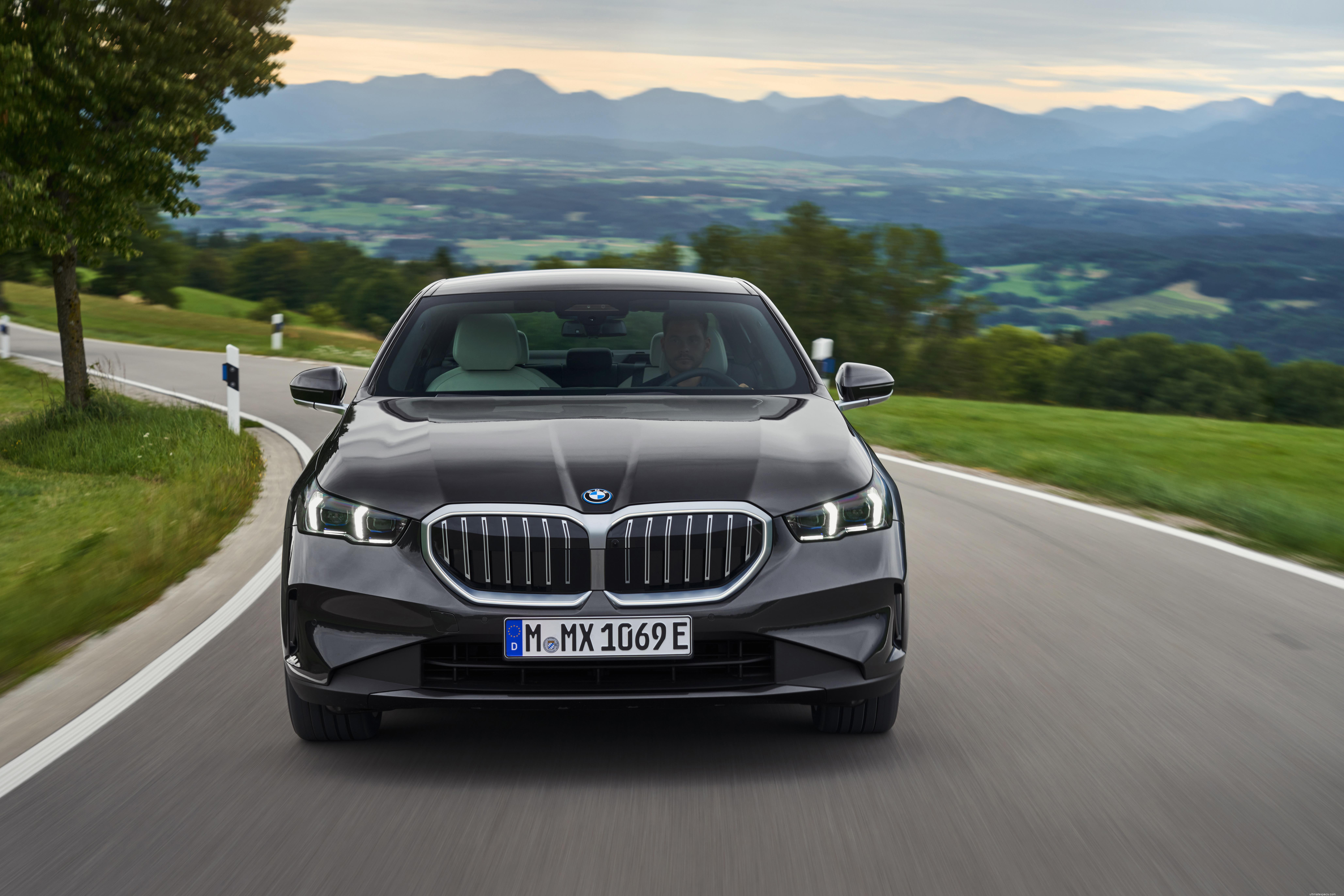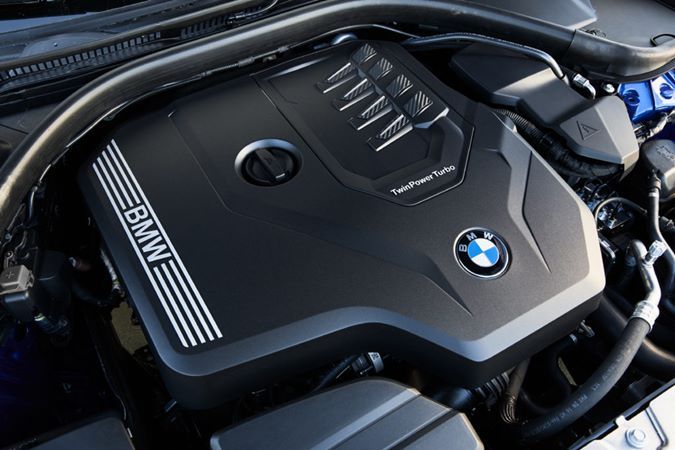
We'd like to inform you about the big-turbo project on BMW's new-generation B48 engines. The B48 used in the BMW 3 (G20) and 5 (G30) series runs the turbo known by Mitsubishi's main code (TD04).
Unlike conventional turbos, it has a reverse-type wheel (spinning counter-clockwise), a new application by turbo makers. Since the turbo is very capable and durable, developing a bigger turbo here is quite hard — because the only parameter we look at is not efficiency, but under which conditions that efficiency occurs. Before fitting a turbo we plan and decide at which pressures and conditions we'll use it. Our aim is for the turbo to benefit us where the standard turbo's efficiency is lower.
Simply put: if our standard turbo makes 1.4 bar but efficiency drops at 1.6 bar, and we target 1.6 bar with our hybrid turbo to raise efficiency and gain power, we can face another issue. Hybrid and standard turbos sometimes stay at similar efficiency at the targeted pressures. The hybrid turbo begins to show its difference and efficiency at pressures like 1.8 bar. We must consider these different criteria. At the pressures where we get the most basic efficiency, engine stress rises, so it is often shelved.
Therefore, when planning, our first criterion is not just power but under which conditions the power is obtained — and applying this to all our work without exception has been and will remain our primary goal.
In short, the reason we do not offer some projects is that they do not meet the above criteria. If the software is not supported by the right hardware, it goes beyond original comfort of use, and since such applications are outside our criteria, we unfortunately do not do them. We think this also answers some questions, especially "why don't you do it?"
After sharing this, we want to show results from some of our tests. Over the past period we brought 2 different turbos from abroad to our own car, tried them and recorded the measurements.
DBN data 1 belongs to our big-turbo car, DBN data 2 to our standard-turbo car.
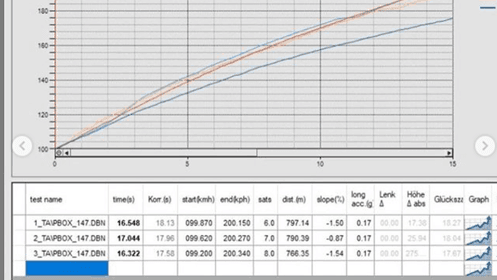 DBN1
DBN1
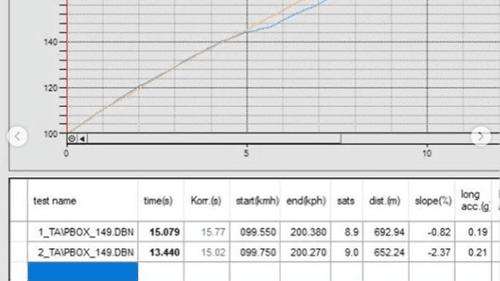 DBN2
DBN2
As seen in the DBN data, the time with the standard turbo is about 1.5 seconds better than with the big turbo. The turbo got bigger, but since efficiency dropped at the same pressures, we did not gain power — there was a decrease.
Extra note: on a different turbo we tried last year we gained roughly 2 seconds, but had to give it up because the pressures were high.
We continue to apply turbos you bring; our recent 7.30i big-turbo project is an example. Our car, which had 100–200 km/h DBN times of 14.87 s with its standard turbo, did 12.88 s at the same place with the big turbo and an ITG in-box filter. We achieved roughly 2 seconds of acceleration. For a car with 22-inch wheels and this weight, we consider it quite efficient.

You can find detailed info and the video at our Instagram link below.