
How many types of DQ200 7-speed transmission are there?
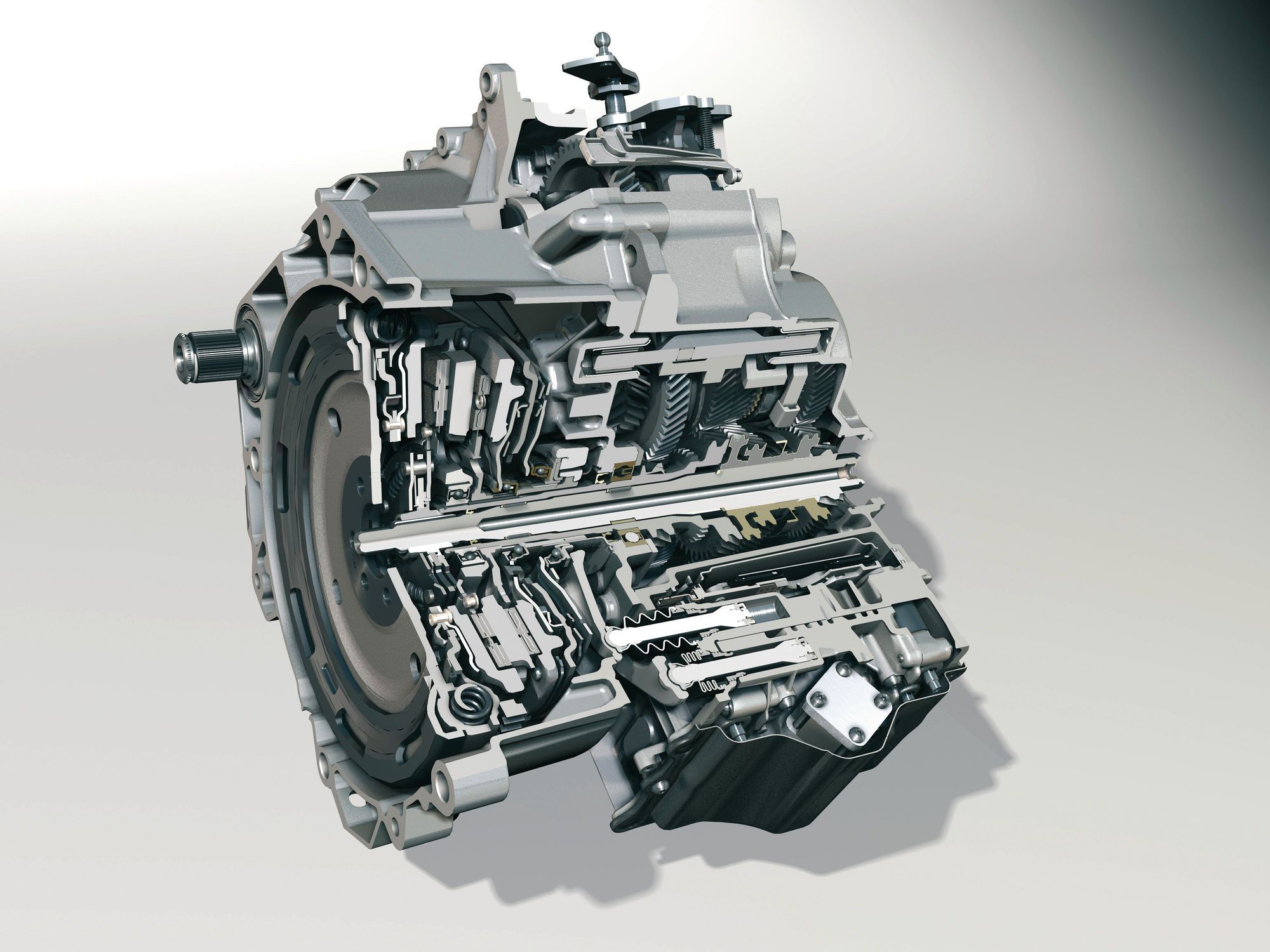
There are 3 generations of DQ200 7-speed DSG.
- DQ200 DXX first generation 7-speed (2012 and earlier)
- DQ200 MQB 7-speed (2012–2016)
- DQ200 Gen2 7-speed (2016 and later)
Why does the DSG shift to 2nd gear so quickly?
The maker keeps 1st gear short so it isn't strained when the car is fully loaded (5 people + luggage) or on very steep ramps. Manual 1st and DSG 2nd have similar ratios. So it shifts to 2nd quickly because 1st is very short. DSG software can change this shifting, but we believe the maker's calibration is optimal.
Why does it rattle in 1st and 2nd around town?
It comes from the K1 and K2 clutches loosening and making noise over time. Apart from the noise it causes no problem.
What mileage/years (average) before the clutch needs changing?
It fully depends on how and where the car is used. Very steep roads, constant 0–100 km/h runs, constant use in heavy traffic, etc. shorten clutch life. Think of it like a manual's pressure plate; since DSG is dual-clutch it has two clutch packs.
Does the P-position fault leave you stranded?
A micro-switch was developed for this fault; fitting it solves the issue. Apart from a momentary, very quick warning while moving that then disappears, there's no harm. The fault can also be removed via coding.
Key differences between dry and wet DSG?
Dry clutch: lighter, less internal friction, therefore lower fuel consumption; it's called dry because the clutch (plates) don't run in oil. There is oil in the system (gears–mechatronics), just not at the clutch. Oil maintenance cost is lower.
Wet clutch: since the clutches run in oil, the hydraulic system can handle higher torque. In cases like Stage 3, clutch pressure can also be raised via software.
What are the DSG types?
DQ200 (the best-selling 7-speed dry clutch here, with 3 generations)
DQ250 (6-speed for engines up to 380 Nm, 4 generations, not used after 2017)
DQ380/381 (for engines up to 420 Nm, introduced in 2015 and still used, 7-speed, 2 generations)
DL382 (for engines producing up to 500 Nm, seen in cars after 2015, 7-speed, an improved new-generation variant of the DL501)
DL501 (for engines producing up to 550 Nm, used 2009–2013, the first 7-speed dual-clutch made for longitudinal engines)
DQ500 (for cars with engines producing up to 600 Nm, 7-speed)
What features does DSG software add?
Launch Control
Launch Control limiter reset (the 200-launch-control limit between services is removed)
Torque limiter removal
Increased clutch pressure (wet clutches)
Faster gear changes
My car shudders in 2nd gear, why?
We can say the clutch is nearing the end of its life; we recommend replacing it.
Can the DSG be harmed after software?
Roughly, DSG components are:
- Mechatronics (includes the electronic control unit and the electro-hydraulic units). Not directly exposed to increased torque and power.
- Clutch: with increased torque and constant 0–100 km/h use, its life shortens a little more.
- Transmission gears: very rarely damaged.
- On wet clutches, it's important that the car — especially torque values — is correctly informed by the engine control unit and works in harmony. The system sets pressure (clutch pressure – main pressure valves) using data from the control unit. An incorrectly calibrated engine control unit can cause incompatibility inside the transmission and create problems. On cars fitted with a big turbo and a wet-type DSG, raising clutch pressure benefits clutch life. On cars with a wet clutch, the platform the clutch sits on must also be replaced.